Salt-based water softener or CO₂ system?
Resin and salt, CO₂ and other scale treatments: understand how the approaches differ before choosing equipment.
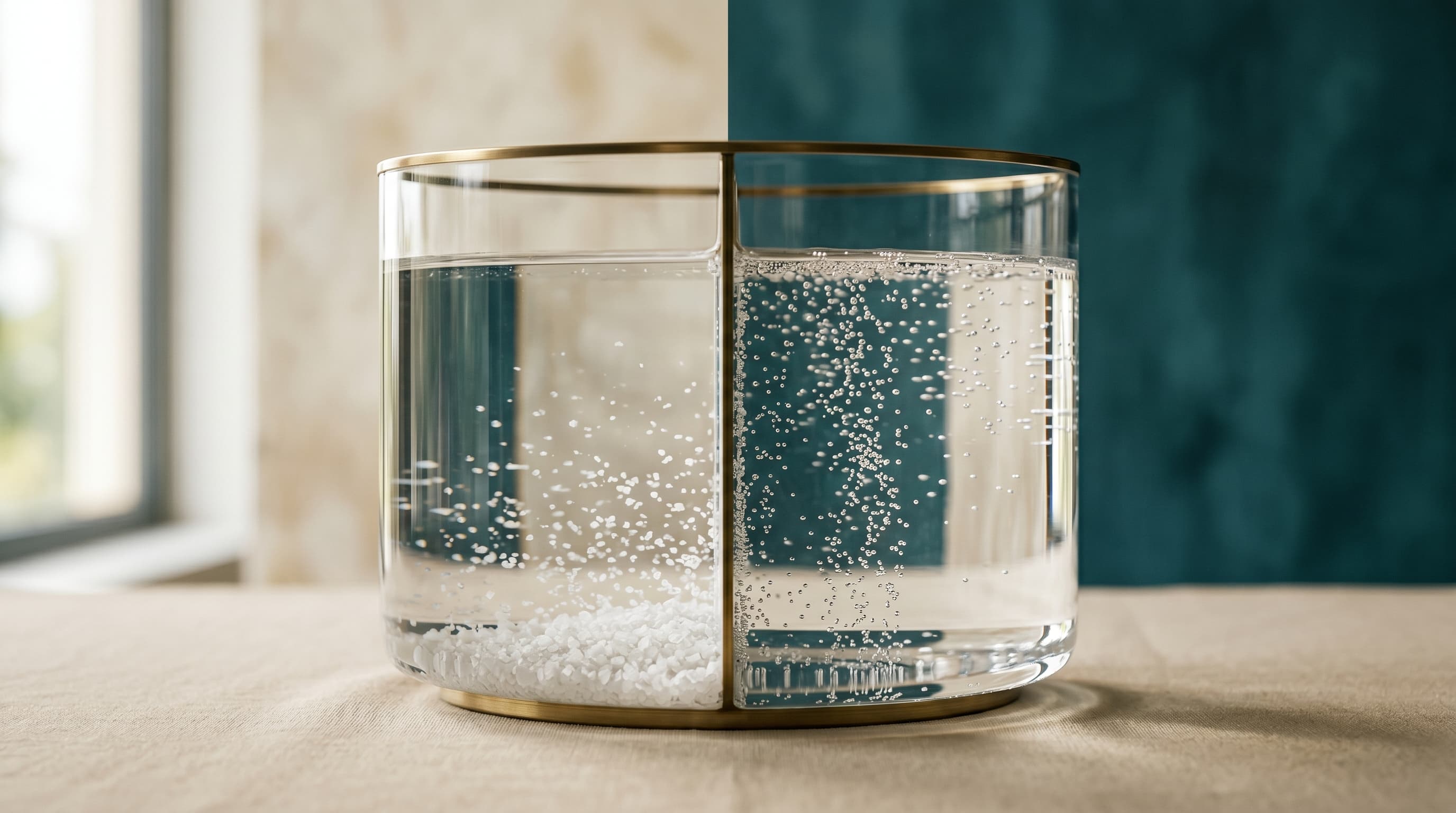
With or without salt? The important distinction is what the equipment does to the water. Reducing measured hardness and treating scale formation are not the same outcome.
Resin-and-salt water softeners
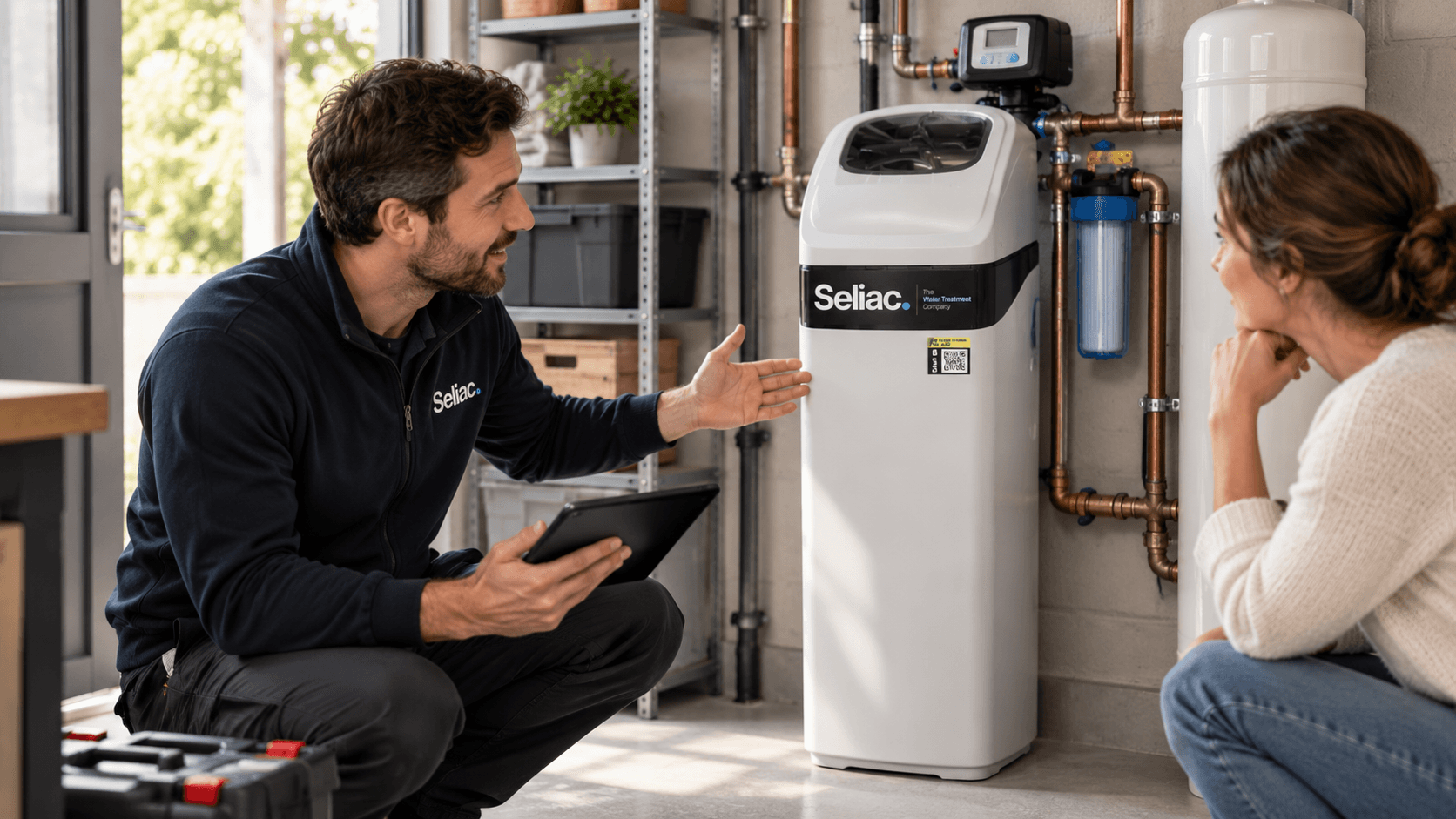
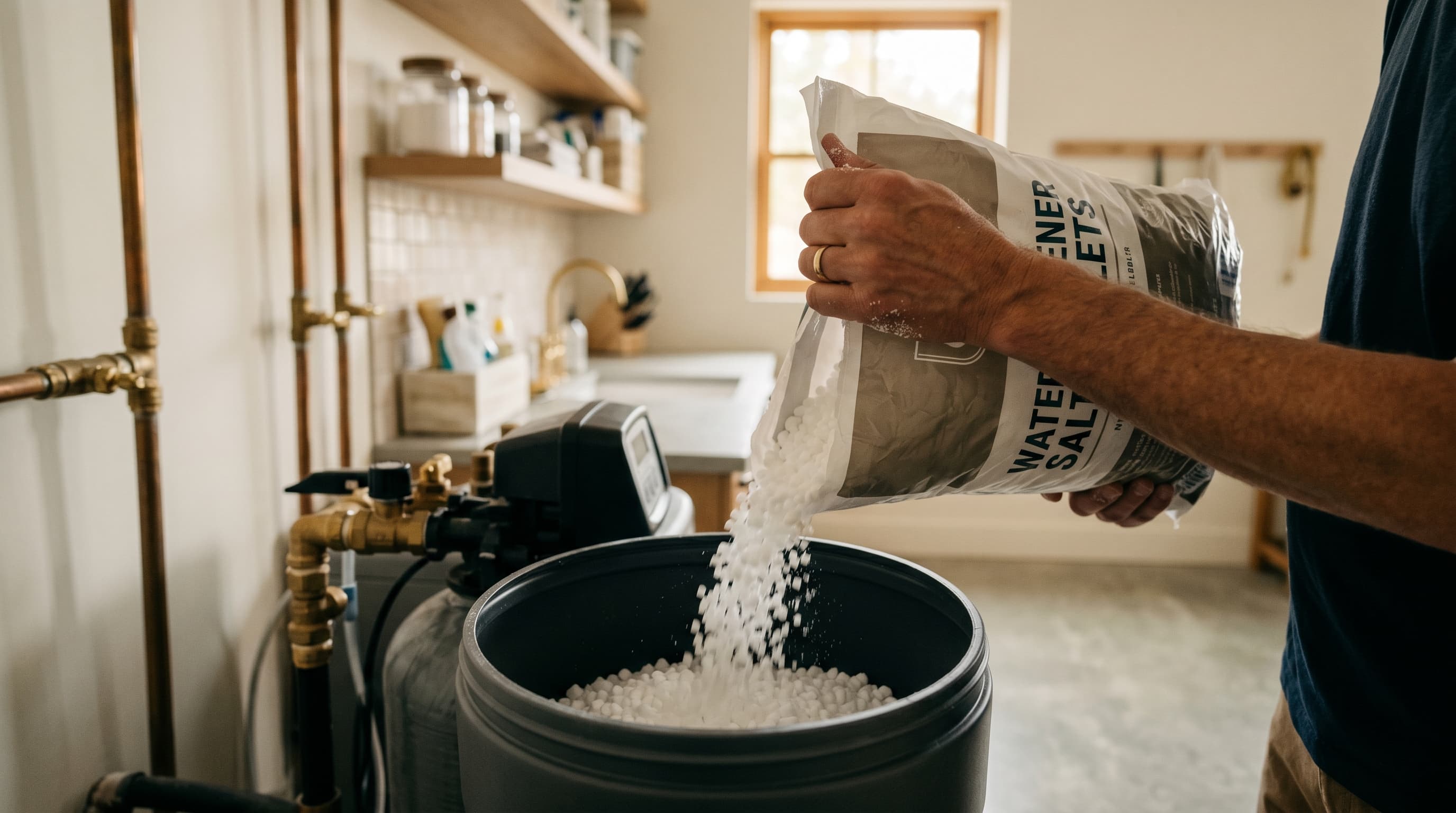
Water passes through an ion-exchange resin that captures calcium and magnesium and exchanges them for sodium. Once the resin’s capacity is used, a brine cycle regenerates it. This reduces the hardness of the treated water. The equipment needs salt refills, regeneration water and periodic maintenance.
CO₂ systems without salt
Food-grade CO₂ is injected to affect the chemical balance of the water and reduce the tendency of scale to adhere. There is no salt regeneration cycle, but the calcium remains in the water. CO₂ supplies, settings and the particular installation still need attention. Ask what result the supplier guarantees and how it will be measured.
Magnetic and electronic scale devices
These devices aim to influence scale formation using magnetic or electrical effects. They do not remove hardness minerals through resin ion exchange. Ask for evidence applicable to the specific device and operating conditions rather than treating it as equivalent to a water softener.
Which should you choose?
- For a reduction in measured hardness throughout the home: consider a resin-and-salt softener
- To explore scale treatment without salt regeneration: compare CO₂ systems and their maintenance needs
- For any device: check the expected result, test method, warranty and ongoing costs
Adoucisseur-Eau.lu offers Adoline resin water softeners with clear supply-and-installation prices. The team can explain the equipment and check whether it meets your household’s needs.
Displayed prices range from €1,009 to €4,350 including VAT, installation and commissioning.